He and Lewis shared the duties of command of the expedition. On the way back, they split up. Clark and several men went southeast, to the Yellowstone River, and followed it to the Missouri. Lewis took Sacagawea and several men and went northeast. They met again in the Dakota Territory, where they had first met Sacagawea.
The following year, Clark married Julia Hancock. They had five children, the first son of whom was named Meriwether Lewis Clark. In 1813, he became governor of the Missouri Territory and Superintendent of Indian Affairs. In 1820, his wife died. The following year, he married again. They had two children. Clark died in 1838, a famous man. |
|





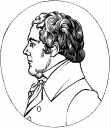 Clark
was a mapmaker. He carried with him a map of North American
and drew on it as the journey progressed. He also took
measurements of river miles, speed, and depth. He labeled
mountains, bluffs, islands, creeks and rivers. In doing so,
he created a master map that is a historical marvel.
Clark
was a mapmaker. He carried with him a map of North American
and drew on it as the journey progressed. He also took
measurements of river miles, speed, and depth. He labeled
mountains, bluffs, islands, creeks and rivers. In doing so,
he created a master map that is a historical marvel.
 They
returned to St. Louis on Sept. 22, 1806. In the more than
two years of their journey, they had covered 8,000 miles and
discovered 173 new plants and 122 species and subspecies of
animals.
They
returned to St. Louis on Sept. 22, 1806. In the more than
two years of their journey, they had covered 8,000 miles and
discovered 173 new plants and 122 species and subspecies of
animals.

Social Studies for Kids
copyright 2002–2026
David White