Lewis was an explorer not by choice but by default. He was a close personal friend of Thomas Jefferson, who was president at the time of the Louisiana Purchase. Lewis was also, at that time, Jefferson's private secretary. Lewis was a natural choice to command the Corps of Discovery, the official name of what we now call "The Lewis and Clark Expedition." He had learned how to determine latitude and longitude, as well as how to classify plants and animals.
Lewis survived a skirmish with Native Americans and a friendly-fire shot. When he made it back home, he was quite famous. However, he wanted to return to the West and persuaded Jefferson to appoint him governor of the Louisiana Territory. He never again found success or fame. He died alone on Oct. 11, 1809, near Nashville. |
|



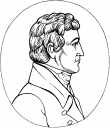 He
joined the Virginia militia in 1794 and helped put down the
He
joined the Virginia militia in 1794 and helped put down the
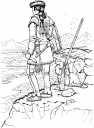 Incredibly,
on the journey west, he discovered 173 new plants and 122
species and subspecies of animals. All of these records were
turned over to President Jefferson when Lewis and William
Clark returned from their journey.
Incredibly,
on the journey west, he discovered 173 new plants and 122
species and subspecies of animals. All of these records were
turned over to President Jefferson when Lewis and William
Clark returned from their journey.

Social Studies for Kids
copyright 2002–2026
David White