|

Men, Women, & Children Built Terracotta Warriors: Study
October 19, 2026
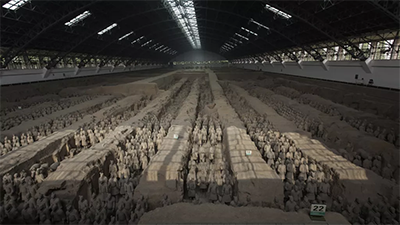 Researchers now think that men, women, and even children helped build the Terracotta Army, the fierce-looking warriors that have stood ready to defend a long-ago Chinese emperor's tomb for more than two centuries. Made up of more than 8,000 life-size clay sculptures of armed warriors, the army guards the tomb of China's first emperor, Qin Shi-huang-di, who died in the 3rd Century B.C. Terracotta horses feature in the army as well, either pulling chariots or wearing saddles in anticipation of bearing riders. The bottom of each figure is clay, and the top is hollow, making it easier for the relatively tall statues to remain upright. It is that clay that has yielded a strong hint that it wasn't just men who built the figures. In making the warriors, the builders left their fingerprints all over the surface. Researchers found fingerprints on arms, heads, hands, feet, and armor of the figures. The remains of those efforts showed different widths between fingerprint ridges, strongly suggesting that women and even children lend their hands to the efforts (since the width between such ridges grows as a person ages).
New Fragment of World's Oldest Peace Treaty Found
September 25, 2026
 The plight of refugees was on the minds of ancient peoples, as evidenced by a newly discovered fragment of the world's first known peace treaty. The Egyptian and Hittite people agreed to the Treaty of Kadesh about 1269 BCE, ending a struggle between Egyptian Pharaoh Ramses II and the Hittite king Hattusili III. The treaty followed the titanic Battle of Kadesh, fought five years earlier, in which tens of thousands fought on both sides. The Egyptians tried mightily to capture the strategic city of Kadesh but did not; however, the result of the battle was one of stalemate, not victory. Casualties were high, encouraging both sides to seek a peace agreement. Other teams in earlier years have found other fragments of the treaty. This latest fragment specifically mentioned considerations for refugees fleeing the battle and its aftermath, offering them protection from reprisals.
Cat, Dog Have Pride of Place on Ancient Roman Mosaic
September 8, 2026
  Archaeologists have uncovered a well preserved mosaic from ancient Roman times that shows a cat named Emerald and a dog named Ocean. The mosaic is on the floor of a villa dating to the late 2nd or 3rd Century BCE and found in Adramytteion, on the Aegean coast of what is now Turkey. The cat panel and the dog panel are two of 15 in the mosaic, which has as its centerpiece a depiction of a gorgon, a legendary snake-haired monster whose gaze was said to turn onlookers to stone. Birds, fish, and a winged horse also feature on the mosaic. Among the colors used are black, blue, burgundy, orange, pink, red, white, and yellow. Archaeologists have uncovered a well preserved mosaic from ancient Roman times that shows a cat named Emerald and a dog named Ocean. The mosaic is on the floor of a villa dating to the late 2nd or 3rd Century BCE and found in Adramytteion, on the Aegean coast of what is now Turkey. The cat panel and the dog panel are two of 15 in the mosaic, which has as its centerpiece a depiction of a gorgon, a legendary snake-haired monster whose gaze was said to turn onlookers to stone. Birds, fish, and a winged horse also feature on the mosaic. Among the colors used are black, blue, burgundy, orange, pink, red, white, and yellow.
Egyptian Princesses Used the Weapons They Were Buried with: Study
September 1, 2026
 A new study suggests that at least some princesses buried in Egypt in ancient times were very familiar with the weapons with which they were buried. A team of archaeologists studied a number of mummies and grave goods of royal women from Egypt's Middle Kingdom. Interred with these princesses were arrows, bows, daggers, and maces, and archaeologists have long thought that the weapons were included only as ceremonial devices, symbols of the wealth of the women buried there. Testing of the remains of the women found that their bones had developed to withstand heavy muscle use, suggesting that they had been trained in the use of the handheld weapons found in their tombs.
Peanut Butter Floor a Tribute to Dutch Artist
July 24, 2026
 It might have been a nutty request, but museum officials were all to happy to comply. The Boijmans Van Beuningen Museum in Rotterdam, the Netherlands, has launched an exhibit that features a 270-square-foot hexagon made of peanut butter. And just for the record, it is smooth, not crunchy. The whimsical artwork is in honor of Wim T. Schippers, a very much well-known artist who wrote poetry and music, produced TV shows, and even directed a play (in which the actors were dogs). He was very much referred to as eccentric, but he had many fans.
Italian Students Break Paper Airplane Record by a Long Way
July 9, 2026
 Pisa is perhaps most well-known for its famed Leaning Tower. But the Italian city can now lay claim to a Guinness World Record, thanks to a group of students using paper and glue. The seven University of Pisa students, who named their plane Icarus, after the figure from Greek mythology who famously flew too close to the Sun, built a paper airplane 7 meters (23 feet) in length, with a wingspan of 20 meters (65.5 feet). The construction weighed 28.5 kilograms (nearly 63 pounds). And it flew for nearly 200 feet.
Second Intact Cannonball Found at Alamo
 Archaeologists have found a second cannonball fired at the Battle of the Alamo. This was one fired by the defenders. Earlier this year, the team, led by senior research Kolby Lanham, found a bronze cannonball that was fired by Mexican forces. This new cannonball is iron and was fired by the Texans defending the fort. The archaeologists said that the find was all the more poignant because it came on March 5, the day before the famed battle took place back in 1836.
Parikh, 14, Wins Spelling Bee in Spell-off
May 29, 2026
 It went down to a spell-off, and Shrey Parikh was victorious. The 14-year-old from Rancho Cucamonga, Calif., won the 2026 Scripps National Spelling Bee. Ending the competition was Parikh's correct spelling of bromocriptine. She took home the trophy, a cash prize of $52,500, a commemorative medal, and a host of spelling-related prizes, including a reference library from Merriam Webster, and a replica set of the 1768 Encyclopedia Brittanica. Technically non-spelling-related prizes included a total of $1,000 in flight credits from Delta Air Lines and a family-oriented trip to Kennedy Space Center, including two days of admission for up to four people, two nights in a hotel, and a meet & greet with astronauts. Runner-up was Ishaan Gupta of Jersey City, N.J., who correctly spelled 25 (of 35) words during the 90-second spell-off, compared to Parikh's winning total of 32 (of 35). That was a new record, breaking the previous high total of 29 (of 30) spelled correctly by Bruhat Soma in 2024.
Mona Lisa to Get Her Own Separate Space in the Louvre
May 26, 2026
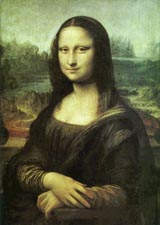 The Mona Lisa is moving. The Louvre, perhaps France's most famous museum, has announced, as part of a $1 billion renovation, that the famed Leonardo painting will have its own exhibition space, 33,000 square foot large and separate from the rest of the museum. In addition, the room will have information about perhaps the world's most famous painting, including its history. Museum figures show that about 20,000 people a day come to look at the famed painting, one of a large handful of masterpieces by the famous Renaissance polymath. Museum officials hope that having the Mona Lisa in its own room will help ease congestion elsewhere in the museum. In 2022, the Louvre decided that the daily maximum was 30,000 people. Museum officials hope that the addition will enable them to accept more than 3 million new visitors annually. The Mona Lisa is moving. The Louvre, perhaps France's most famous museum, has announced, as part of a $1 billion renovation, that the famed Leonardo painting will have its own exhibition space, 33,000 square foot large and separate from the rest of the museum. In addition, the room will have information about perhaps the world's most famous painting, including its history. Museum figures show that about 20,000 people a day come to look at the famed painting, one of a large handful of masterpieces by the famous Renaissance polymath. Museum officials hope that having the Mona Lisa in its own room will help ease congestion elsewhere in the museum. In 2022, the Louvre decided that the daily maximum was 30,000 people. Museum officials hope that the addition will enable them to accept more than 3 million new visitors annually.
The Strait of Hormuz: Geography and Global Importance
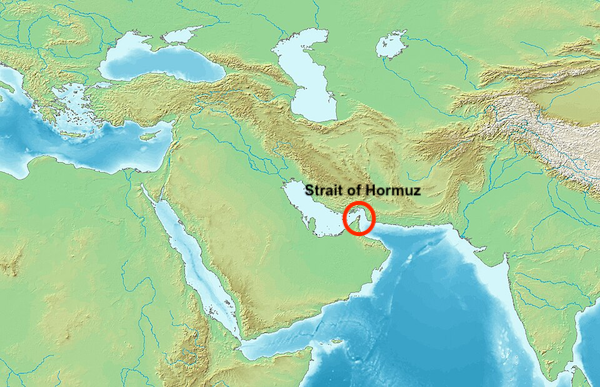 The Strait of Hormuz is a body of water between Iran and Oman and is vastly important economically and politically because it is the only waterway connecting the Persian Gulf to the world's oceans. A very large number of ships move through the strait each day, transporting exports from Iran, Iraq, Kuwait, Qatar, Saudi Arabia, and the United Arab Emirates (UAE) to ports worldwide. All of this is important in a global economic sense because one-fifth of the world's liquefied natural gas and one-quarter of the ship-carried oil travels through the strait. If the tankers carrying that oil and gas cannot pass through the strait, then they must find a longer way around (if possible), causing delays with delivery and potentially raising prices of the oil and gas being delivered. (As well, a large number of ships transport fertilizers from Middle Eastern ports to the wider world.)
 Iliad Fragment Found Stuffed in 2,000-Year-Old Egyptian Mummy Iliad Fragment Found Stuffed in 2,000-Year-Old Egyptian Mummy
May 15, 2026
In Egypt, archaeologists have found, alongside a 2,000-year-old mummy, a fragment of Homer's Iliad, an ancient account of the Trojan War. The passage from Book 2 of the famed epic poem describes the naval strength of the Achaean army that was besieging the city of Troy. A team directed by Ignasi-Xavier Adiego of the University of Barcelona found the papyrus next to the mummy of a nonroyal male at Oxyrhynchus, a regional capital that was at one time the third-largest city in Egypt. The city ruins, near what is now El-Bahnasa about 120 miles south of Cairo, are known for the number of preserved papyri there. The team said that the inclusion of the papyrus, sealed inside a clay packet, with the mummy would have been intentional and that perhaps it was meant to accompany the person into the afterlife along with any number of other objects that Egyptians typically stored alongside bodies.
Iraq Funds New Effort to Restore Famed Ziggurat of Ur
May 15, 2026
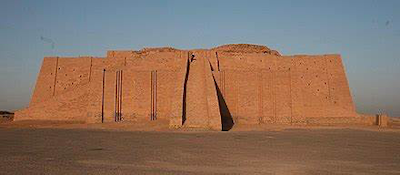 The Iraqi government has poured money into a project to help preserve the Ziggurat of Ur, a UNESCO World Heritage Site and one of the enduring symbols of a long-ago civilization. Ur is one of the oldest cities in the world, created and first inhabited nearly 6,000 years ago in the lands of ancient Sumeria, during the reign of King Ur-Nammu. Those doing the preservation work are using new materials that incorporate chemical materials and physical properties of samples of the existing building.
|
Social Studies for Kids
copyright 2002�2020
David White
|


