How Did We Get the Alphabet?
Part 2: One Symbol, One Sound People living in Sumeria are thought to have used the first written language, about 5000 years ago. Other claims have been put forward for civilizations in China and India. But what about the first alphabet? Recent research suggests that the idea of an alphabet (in which one symbol stands for only one sound) was first used in Egypt about 1900 B.C. Civilizations that traded with or fought against Egypt were exposed to this alphabet, and the idea spread.
Today, people use letters and symbols. Most written communication uses letters and words, but pictographs haven't gone away. You see them all the time. They are a constant reminder that communication is always evolving but is, at its most basic, always the same. 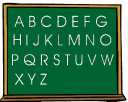  First page > The Early Days > Page 1, 2
|
|






 The
ancient Greeks adapted this alphabet and created their own.
The ancient Romans refined it to a state almost like our
modern alphabet. The idea of stringing letters together to
make words was born. You can see by looking at letters from
the Roman alphabet that these letters survive almost intact
in our modern English alphabet.
The
ancient Greeks adapted this alphabet and created their own.
The ancient Romans refined it to a state almost like our
modern alphabet. The idea of stringing letters together to
make words was born. You can see by looking at letters from
the Roman alphabet that these letters survive almost intact
in our modern English alphabet.
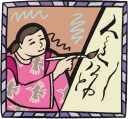 This
was the case in the Western world, anyway. A similar thing
happened in the East. Paper was invented in China early in
the second century A.D. Before that, written communication
was done on rocks and shells, in the same way it was done in
the West and the Middle East. And the ancient Chinese
invented their own system of symbols that eventually became
an alphabet.
This
was the case in the Western world, anyway. A similar thing
happened in the East. Paper was invented in China early in
the second century A.D. Before that, written communication
was done on rocks and shells, in the same way it was done in
the West and the Middle East. And the ancient Chinese
invented their own system of symbols that eventually became
an alphabet.
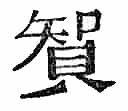 Much
of this is still used today. The Chinese alphabet of today
is a mixture of single-sound symbols and symbols that
represent a word or a concept. It is a beautiful-looking and
elegant-sounding language, one full of tradition and
tapestry.
Much
of this is still used today. The Chinese alphabet of today
is a mixture of single-sound symbols and symbols that
represent a word or a concept. It is a beautiful-looking and
elegant-sounding language, one full of tradition and
tapestry.

Social Studies for Kids
copyright 2002–2026
David White