Brown v. Board of Education
On May 17, 1954, the Supreme Court unanimously announced an end to public segregation in schools in the famous Brown v. Board of Education of Topeka case.
Arguing the case before the Court were, for the plaintiffs, Thurgood Marshall, general counsel of the Legal Defense Fund, and for the defense, John W. Davis, a former solicitor general. Direct precedent in the case pointed to an 1896 case, Plessy v. Ferguson, which had upheld segregation in public railway cars. But in an opinion of historic magnitude, the Court struck down Plessy, saying "we cannot turn the clock back to 1868 when the 14th Amendment was adopted, or even to 1896 when Plessy v. Ferguson was written." In other words, the Court was applying the 14th Amendment to the realm of public education as it stood in the present day. Thus, "Separate educational facilities are inherently unequal" and "such segregation is a denial of the equal protection of the laws." Desegregation in schools happened slowly and with further verification from the Supreme Court and from lower courts, but it did happen. |
|





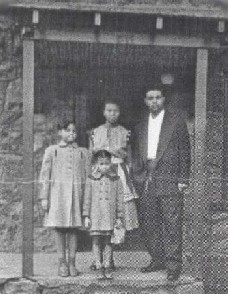 Linda Brown was an African-American third-grader whose father, Oliver Brown, had sued the school system in Topeka, Kan., alleging that the school his daughter went to, which had only African-American students, was unequal to the school that only white Americans went to. Further, Brown alleged, the school system was discriminating against African-American students in violation of the 14th Amendment, which granted all Americans the right to equal protection and, by extension, the right to an equal education.
Social Studies for Kids
copyright 2002–2026
David White